


|
|


Now the fun part....
I saw a post in my WeChat group, claiming the humanoid robotics firm, Figure AI, is the best in the sector. I disagree. I don't mean it is not a good one but in my mind, Tasla's Optimum is by far THE best in the sector! Regardless, I have money in both companies and I will be glad either of them or better both can advance to make humanoid robotics as a household necessity. As a matter of fact, I even bet that our retirement life will be largely dependent on the functioning humanoid robotics in the foreseeable future. That's why I'm happy to see this writeup about the advances made by both companies.
Solving for Figure’s “Data Problem”
by J Brown
Last month I was excited to see an announcement made by a leading humanoid robotics firm, Figure AI, for what it calls Index – its program to build “the world’s largest and most diverse physical dataset."
One of Tesla’s key competitive advantages in the autonomous driving industry has been its data repository of real-world video, which it used to train its full self-driving (FSD) software.
Both the repository and Tesla’s strategy for collecting that data have distinguished it from its competitors in the autonomous driving industry.
Rather than manufacturing two different product lines – electric vehicles (EVs) capable of self-driving and just plain-old EVs – Tesla designed and manufactured all of its EVs to be capable of self-driving.
Every Tesla EV came with a full self-driving computer and all of the cameras around the EV to capture a 360-degree view of its driving conditions.
Naturally, this increased the cost of manufacturing each EV. After all, many Tesla owners never signed up for the self-driving software, which costs extra. Those Tesla owners never needed the AI hardware or cameras, but the hardware was there anyway, and for good reason.
Having the AI hardware in every Tesla EV enabled Tesla to upsell many of its customers to self-driving software after the initial purchase or lease.
But the real value to Tesla was the ability to collect vast amounts of real-world data in natural driving conditions…
Building the Foundation
This all began shortly after Tesla installed its Autopilot hardware into Teslas in late 2014. Designed primarily for highways, Autopilot was a lower level of autonomous driving made available to Tesla customers in 2015. It was the software that preceded full self-driving software.
Prior to FSD, Tesla managed to collect about 9 billion miles of data of Teslas driving on Autopilot from millions of Teslas already on the road.
When a customer returned home, a Tesla EV would connect to a WiFi network and automatically upload that data to Tesla’s data repository. Those 9 billion miles of collected data became the foundation for the early training of Tesla’s vision-based full self-driving software.
The deployment of Tesla’s FSD software and more advanced versions of its AI hardware enabled even more valuable data collection of real-world traffic conditions on surface roads and in more urban environments. As Tesla’s “fleet” of EVs capable of autonomous driving grew, so did its data collection efforts.
It wasn’t long before Tesla’s autonomous miles driven using FSD exceeded that of Autopilot miles driven.
Tesla has now collected data on more than 14.59 billion autonomous miles on FSD, 5.67 billion of which have been collected in urban environments (i.e., cities).
By way of comparison, Google’s Waymo autonomous vehicles have only collected data on 220.6 million autonomous miles with its far less versatile non-vision-based autonomous software. It’s a small fraction of Tesla’s 14.59 billion autonomous miles, only about 1.5% of what Teslas have driven.
This is one of the key reasons that Tesla’s Cybercabs and Robotaxis are so incredible. The autonomous software that provides the intelligence of those ride-hailing services is the same software that exists in all production Teslas with FSD.
And this software also became the foundation for Tesla’s humanoid robot – Optimus.
The Index of Autonomy
There are more parallels between the two technologies than you might think. After all, a self-driving car is nothing more than a robot on four wheels.
Which raises the question, for those companies building intelligent general-purpose humanoid robots, how can they collect the training data needed to train humanoid robots without millions of prototype robots operating in the real world?
It’s a classic chicken-and-egg problem. Electric vehicles are one thing. Even when they weren’t intelligent and capable of autonomous driving, they could – and did – collect useful data as a car that could be used for training a powerful AI.
But a humanoid robot without intelligence and knowledge of the real world would serve no purpose at all. It would be a fairly useless chunk of technology with little utility.
Tesla has an advantage already for its humanoid robot technology with FSD as a foundation and thousands of Optimus robots already working in Tesla offices and factories collecting data.
But what about the other robotics companies that don’t already have infrastructure and technology in place for data collection?
Last month I was excited to see an announcement made by a leading humanoid robotics firm, Figure AI, for what it calls Index – its program to build “the world’s largest and most diverse physical dataset.”
Index had been in stealth for about four months before the program was made public. It’s a very clever and smart way for Figure to solve the data problem.
Figure developed a downloadable smartphone app that enables what Figure calls Creators to sign up, receive a video recording device (a lightweight headset with a camera attached), record tasks being performed throughout the day, and then get paid for uploading video back to Figure.
As we can see above, Figure provides a task list of tasks that it desires to collect data from humans performing. For whatever tasks it is trying to improve the performance of, it simply pushes out a task list to all of its Creators.
Wearing the video recording device, Creators can earn income by simply going about normal chores throughout the day. Below is a short video clip of what Figure sees from the video data collected by Creators.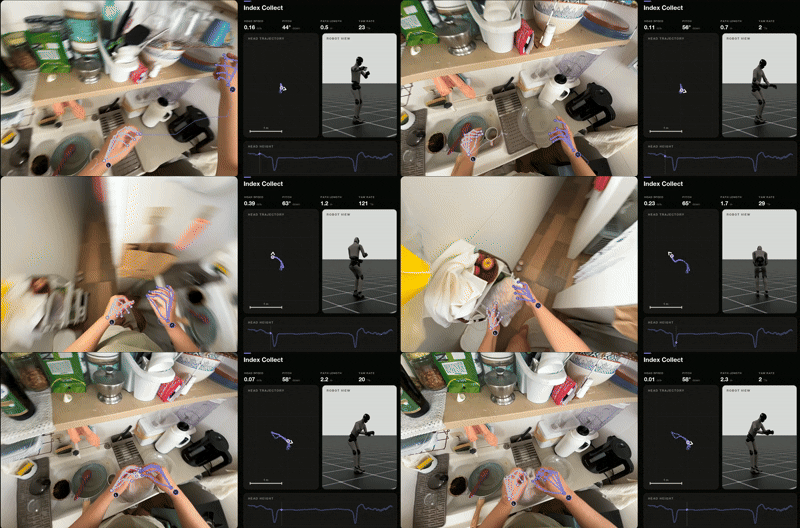
Index Data Collection by Creators | Source: Figure AI
As of August, Figure had already paid out $15 million to its Creators for their data collection efforts. And as of a few days ago, Figure’s CEO announced that the company had crossed 86,000 weekly active users uploading data to Figure.
It’s pretty impressive what Figure has done in only five months. It has already collected more than 22 million videos of real-world tasks performed by its global network of Creators. It was smart for Figure to create the financial incentive to accelerate that data collection.
Each point of light shown on the image below represents the location where a video has been collected to augment Figure’s dataset used for training its humanoid robot platform,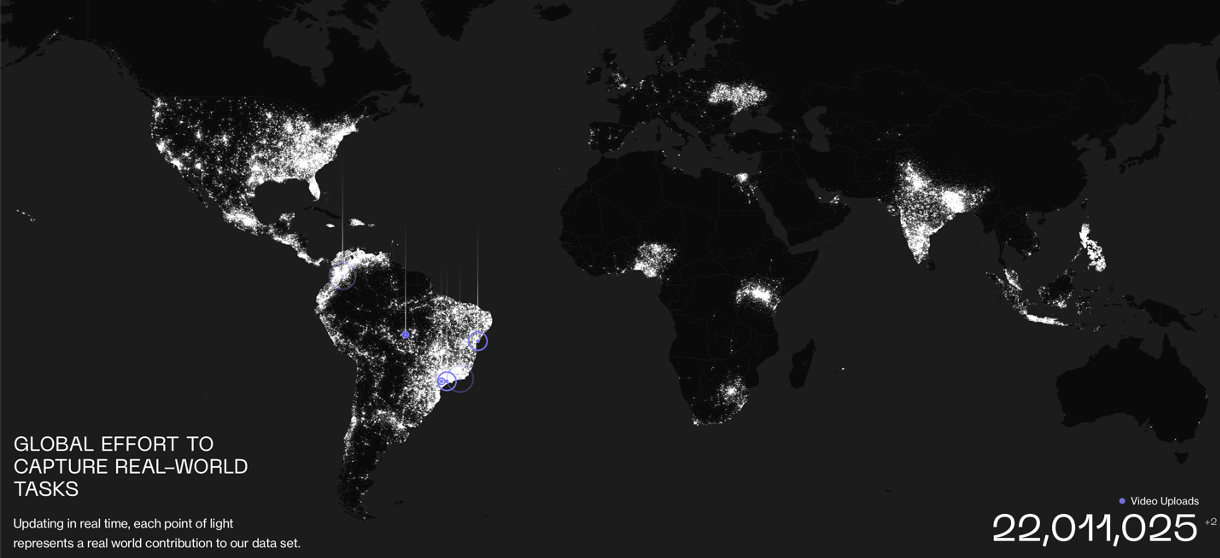
Creators Video Uploads | Source: Figure AI
Figure has stated that it is committed to spending $1 billion in the next 12 months on data collection and computational resources to train its Figure robots.
It’s a massive sum for a startup company that just formed a few years ago, in 2022. But it raised $1.5 billion in May 2025 in its Series C round, and it will almost certainly raise another large round within the next six months to continue to accelerate.
It would be very smart to do so. With this program, Figure is a contender in the race to build intelligent general-purpose humanoid robots.
They Will Walk Among Us
This is a massive, billion-plus unit market opportunity literally worth trillions of dollars. Elon Musk has said that eventually, about 80% of Tesla’s total value will be based just on its Optimus business.
No other technology can radically solve labor shortage problems in specific industries, as well as transform the labor markets, improving quality of life on a global scale.
Industry, logistics, distribution, health care, consumer, agriculture, security, manufacturing, education, and many other sectors will be transformed by intelligent general-purpose humanoid robots.
And the world will adopt these new intelligent “beings” as quickly as they can be manufactured.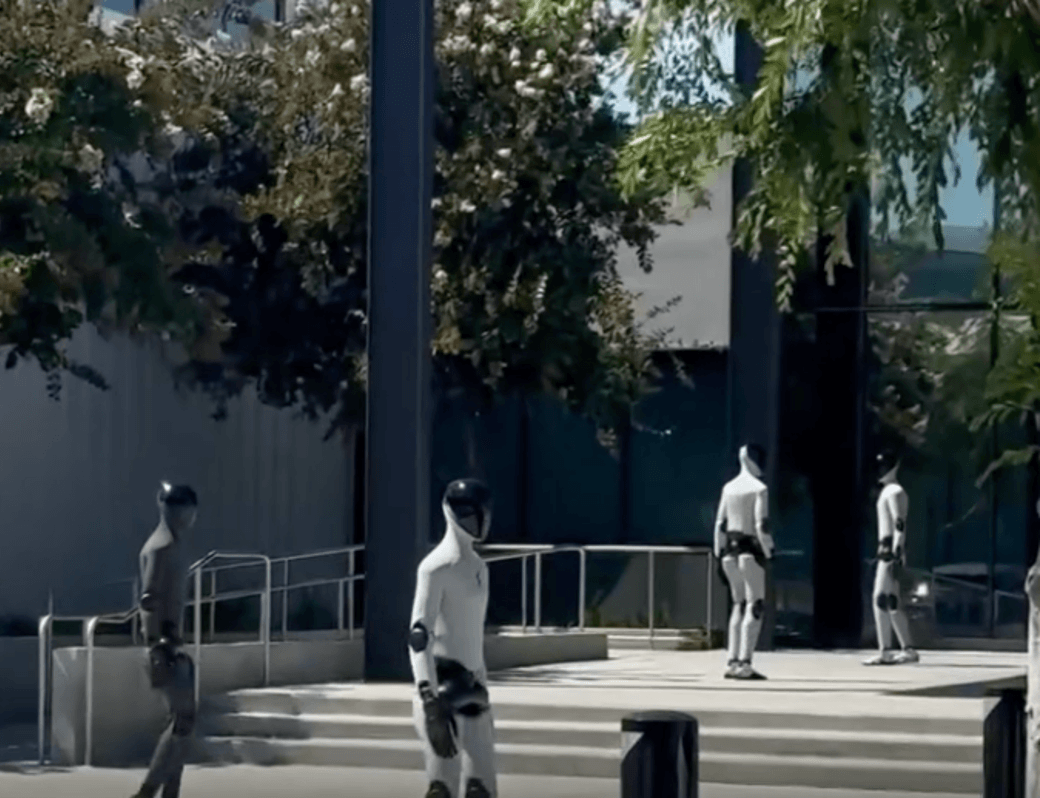
They will walk among us…

For those who follow the AI development, they must be frightened these days for a fatal AI warning. While there is certainly some merit to be cautious about the fast uncontrolled development in AI, this particular warning smells foul. Let me share a write-up by an expert in the tech circle about this propaganda foul play.


